From Dependency to Autonomy: Why Ownership Matters
For years, the "safe" move was to rely on SaaS (Software-as-a-Service) or shared hosting environments. They manage everything for you, which sounds like a dream at first. But as your digital footprint grows, you start hitting walls. You’re bound by their terms of service, their security vulnerabilities, and their unpredictable pricing hikes. By moving to a VPS, you’re making a power move: shifting from being a digital "tenant" to a "homeowner."
Unlocking Potential Beyond Simple Web Hosting
Unlike traditional hosting that’s strictly built for displaying websites, a VPS is a blank canvas. With full Root Access via SSH, the training wheels are off. You are no longer restricted to just running a blog; you can deploy an entire ecosystem of automated tools that work for you 24/7.
1. Deploy Your Own AI Army
While most people use AI through a restricted web browser, advanced creators use a VPS to run autonomous AI agents. These agents can monitor market trends, scrape data for research, or manage community engagement around the clock—all without needing your laptop to stay powered on. Best of all? Your strategic prompts and proprietary data stay private.
2. A Personal Cloud That’s Actually Private
Why pay for multiple cloud storage subscriptions when you can host your own? With a VPS, you can install private cloud software to manage your media, documents, and backups. It’s not just about saving money; it’s about ensuring no third-party company is scanning your personal files for advertising purposes.
Strategic Advantages of Self-Hosting
Mastering the "Command Center" via SSH
The only real barrier to digital sovereignty is the technical learning curve. However, mastering SSH (Secure Shell) is a small price to pay for the freedom it provides. Managing your server via the terminal allows for high-level automation that a basic interface simply cannot match. From running complex Python scripts to tightening your server security, SSH is the ultimate tool for the modern sovereign creator.
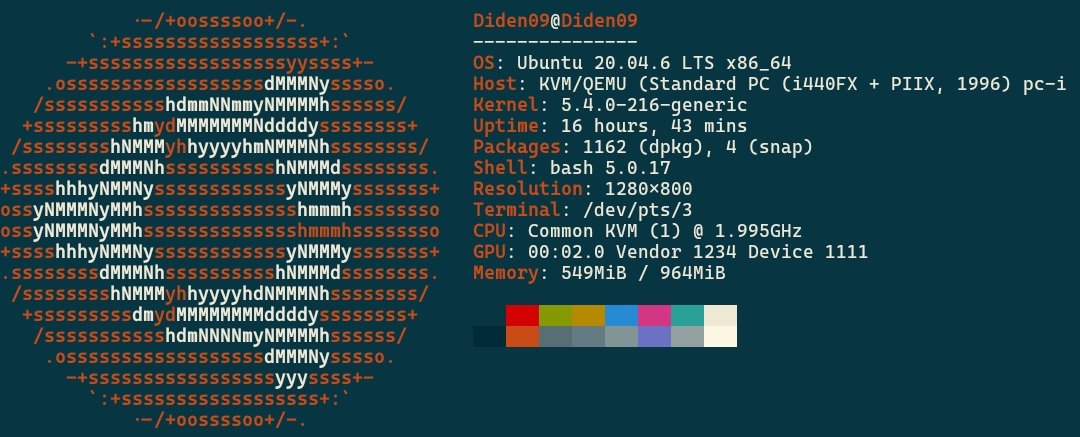
Taking control: A look inside my Ubuntu-powered VPS terminal.
The Math of Freedom: Turning Subscriptions into Savings
Let’s talk numbers. In the current SaaS-heavy landscape, creators often find themselves paying for five or six different monthly subscriptions: $10 for cloud storage, $15 for an AI interface, $20 for a project management tool, and another $10 for basic web hosting. Before you know it, you’re bleeding $50 to $100 every single month for tools you don’t even truly own.
By consolidating these services onto a single VPS, you can effectively "cancel" those recurring bills. A mid-range VPS—costing roughly $10 to $20 a month—has enough horsepower to run all those applications simultaneously. You aren’t just gaining technical freedom; you’re building a more sustainable, high-margin digital business by cutting unnecessary overhead.
Future-Proofing Your Digital Legacy
Technology moves fast. Today it’s AI agents; tomorrow it might be something entirely new. When you rely on third-party platforms, you have to wait for them to implement new features. If they decide a certain technology is too risky or not profitable enough, you’re out of luck.
With a self-hosted VPS, you are at the forefront of innovation. Want to experiment with a new open-source LLM (Large Language Model)? You can deploy it instantly. Want to try a decentralized social media protocol? You have the infrastructure ready. A VPS ensures that your setup is future-proof, allowing you to pivot and adapt to new trends the moment they emerge, without waiting for permission from a corporate gatekeeper.
FAQ: Understanding Digital Sovereignty & VPS
Q1: Is self-hosting actually more expensive?
A1: At first glance, a VPS might seem like an extra cost. But as you scale, it becomes much more cost-effective. You can run multiple services—Web, AI, Cloud, and Databases—on a single server instead of paying for five different monthly subscriptions.
Q2: Do I need to be a coding genius to do this?
A2: Not at all. You just need to be willing to learn basic Linux commands. While open-source control panels can simplify things, knowing your way around SSH is highly recommended to keep your "digital fortress" secure.
This article is provided strictly for educational and informational purposes. Important: The author is NOT affiliated with, sponsored by, or in partnership with any third-party services mentioned in this content.
All brand names used are for illustrative context only. The implementation of SSH and VPS technology carries inherent risks; the author is not liable for data loss or technical errors resulting from improper server management. Proceed at your own risk.